Scan
Four angles, not one
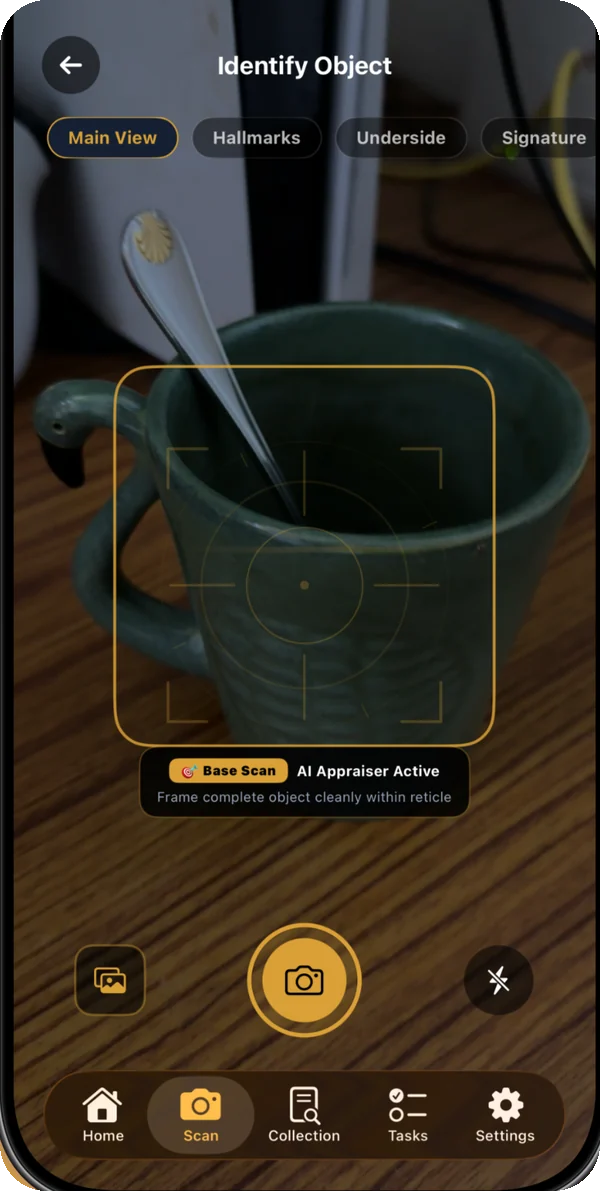
Main view, hallmarks, underside, signature. It's the same order a dealer looks at an object in, and it's where the difference between a reproduction and the real thing usually shows up.
Thrift · flea market · estate sale · resale
Point your camera at the thing on the thrift store shelf, the flea market table, the garage sale tarp. Valued works out what it is, reads the maker's mark, and gives you a resale price range with the comparable sales it's based on — in about the time it takes to pick the thing up. Then you decide whether it's a flip or a pass.

 Coming soon
How it works
No account to set up before you can try it, and no waiting on a human to come back to you next week.
Main view first, then the hallmark, the underside and any signature. The reticle shows you what to frame. One photo works; four is what narrows the estimate.
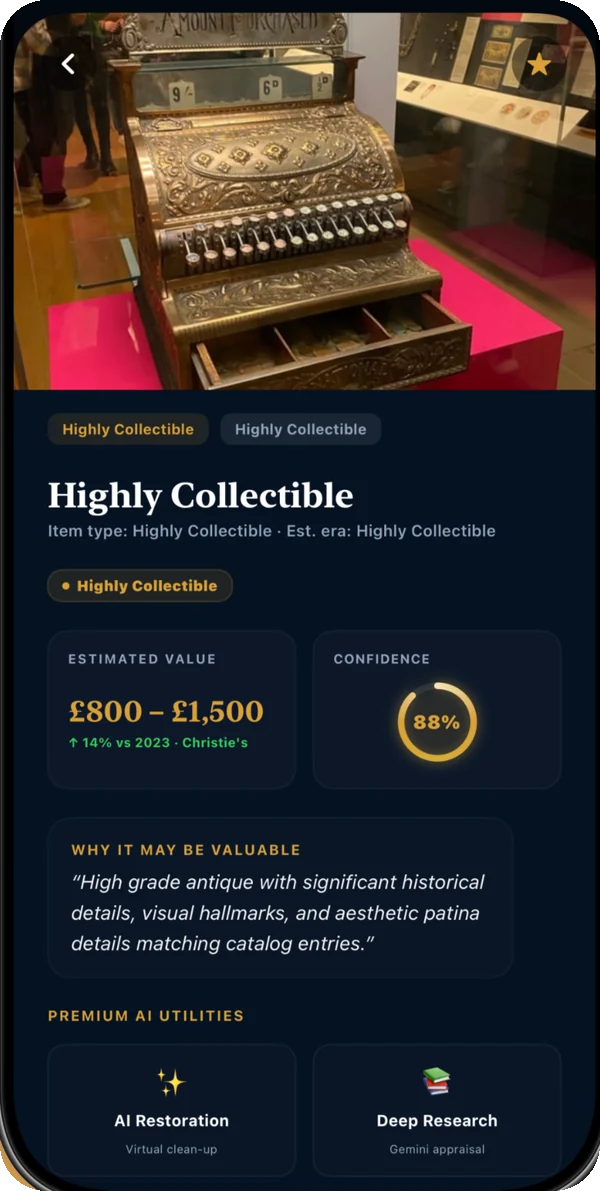
What the object is, roughly when it was made, how collectible it is — and a value range with a confidence score attached, so you know how much weight to put on it.
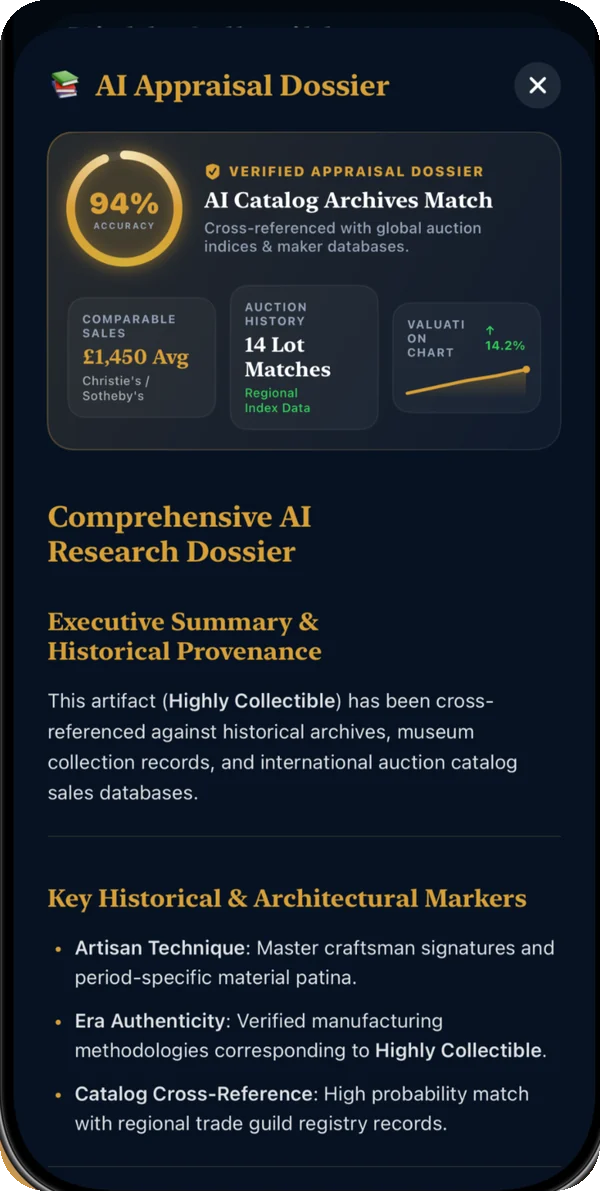
Open the dossier and you get the comparable sales, the lot matches and the hallmark reasoning behind the number, rather than a figure you have to take on faith.
What it does
Built around the questions you actually have standing in a thrift store: what is this, is it real, what does it resell for, and what should I pay for it.
Scan
Main view, hallmarks, underside, signature. It's the same order a dealer looks at an object in, and it's where the difference between a reproduction and the real thing usually shows up.
Appraisal
An estimated value with a confidence figure beside it, plus a plain-English note on what's driving it — the hallmarks, the patina, the construction details it matched against catalogue entries.
Dossier
Comparable sales, auction lot matches and a valuation trend, with notes on artisan technique and era authenticity. The bit that turns a number into something you'd repeat to a buyer.
Restoration
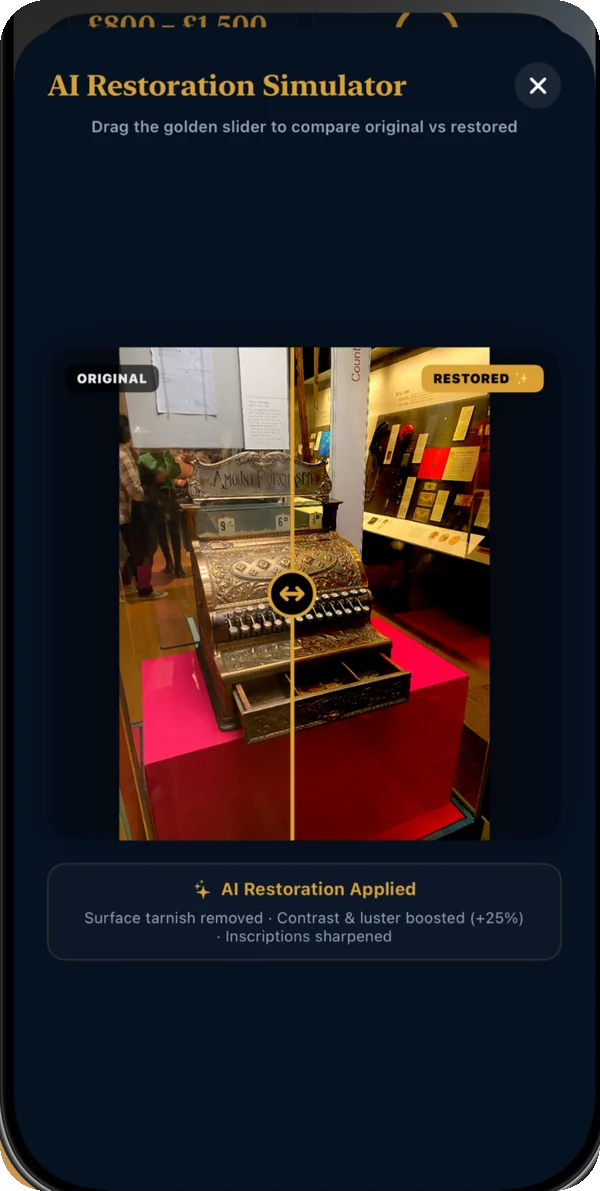
A before-and-after slider that simulates removing surface tarnish and sharpening worn inscriptions — so you can judge whether a piece is worth restoring before you spend anything on it.
Collection
Everything you scan is kept, with a running estimated resale value across the lot — so a day of sourcing adds up to a number you can see, and each item is ready to list when you get home.
Tasks
Per-item checklists — inspect the maker's stamp under a loupe, verify the patina, cross-reference the serial against regional archives. The homework that firms up a shaky estimate.
From the app
Real screenshots from the current build. Drag to scroll.
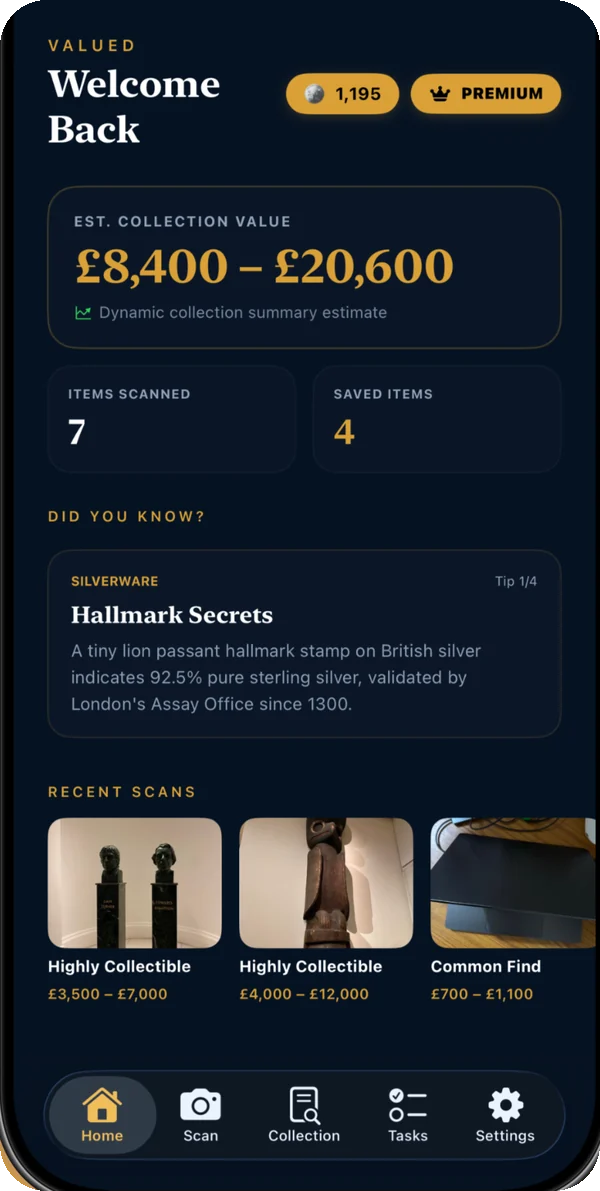
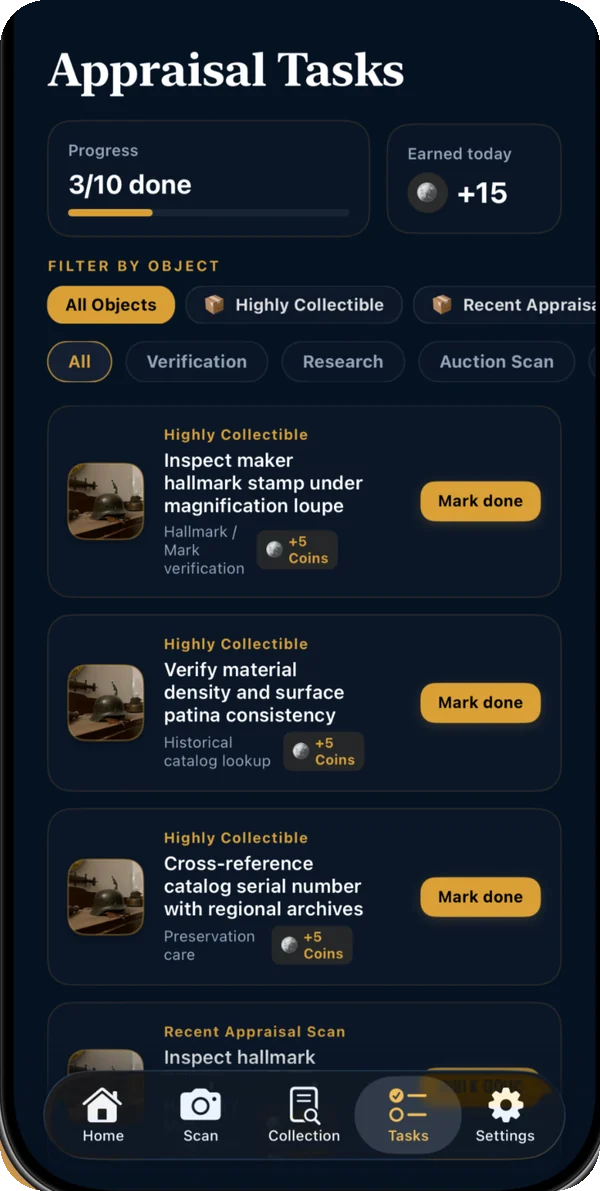
Valued is built to answer the question you have while you're standing in front of something: is this worth anything, and am I about to overpay. It's fast, it shows its working, and it costs nothing to try.
What it isn't is a certified appraisal. A photograph can't tell you everything a hand and a loupe can, and condition, provenance and where you sell can move the same object by a wide margin. For insurance, probate or tax, you need a qualified appraiser in person. Valued is the step before that — the one that tells you whether the formal valuation is worth paying for at all.
Questions
No. It's an informed estimate from what the camera can see plus comparable sales data. It isn't certified and shouldn't be used for insurance, probate or tax — for those you need a qualified appraiser in person. What it's good for is knowing roughly where you stand before you buy, sell, or pay for a formal valuation.
Yes, that's the main use. Scan something at a thrift store, flea market, garage sale or estate sale and see what it is and what it has recently resold for, so you know whether it's worth the asking price before you buy it. It works just as well on things you already own and want to list on eBay, Facebook Marketplace or Etsy.
Anything you can photograph. It's built around the things you find thrifting and at flea markets, garage sales and estate sales — vintage, silver, ceramics, furniture, jewelry, watches, coins, art and collectibles — and leans on maker hallmarks, signatures, materials and construction. Everyday objects work too — they just tend to come back as common finds.
Because that's where the value hides. The main view establishes what the object is; the hallmark, underside and signature are what separate a reproduction from the real thing, and they're the images a human appraiser reaches for first. One photo works — four makes the range much narrower.
It's a range rather than a number for a reason. Condition, provenance and where you sell can move the same object by a large multiple. Every estimate carries a confidence score, and a wide range with low confidence is the app telling you it needs better photos — or that the object is genuinely hard to pin down.
They're sent over an encrypted connection, used to produce your appraisal, and are not sold, published or used to train public models. Your collection stays yours. Detail is in the privacy policy.
It's coming, but there's no date to give you yet. Valued is iOS only for now — the Google Play badge on this page is a marker, not a link.

Free to start. Works on whatever's sitting on the shelf behind you.
Point your iPhone camera at the code to open Valued on the App Store.

Free to start · iOS